With François Provost now at the helm of Renault, the new strategic plan “FutuREady” has been unveiled. While Dacia and Renault set clear ambitions, Alpine’s future appears uncertain, casting doubts on the sports brand. This strategy could redefine Renault’s position in the global automotive market.


A Fresh Start for Renault and Dacia
The Renault group, recently shaken by the unexpected departure of Luca de Meo, has presented its strategic plan, “FutuREady”. Unlike the flashy “Renaulution”, this new approach seems more pragmatic. The goal is clear: the brand aims to reinvent itself while staying true to its roots. For Renault, this translates to 12 planned launches over the next five years, with a particular focus on international markets. The brand aims for 50% of its sales to come from outside Europe, a strategic choice in the face of increasing competition on the continent.

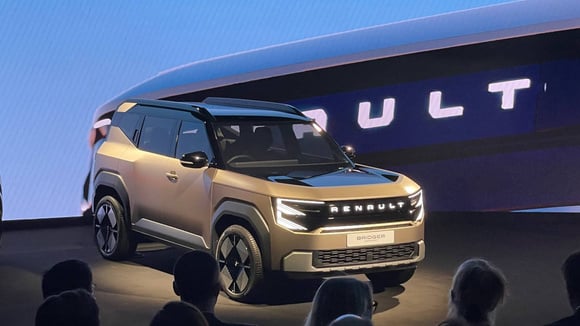
The small Bridger SUV, designed in India, illustrates this desire for internationalization. Although aimed at emerging markets, this model reflects a global ambition. It remains to be seen if this strategy will allow Renault to navigate European regulatory constraints while maintaining an electrifying offer for European customers.
Moving Upmarket for Dacia
Dacia, Renault’s Romanian subsidiary, seems to be taking center stage with ambitious projects. The automaker announces the launch of several electrified models by 2030, aiming for two-thirds of its sales to be electrified. The Striker, a crossover wagon, is set to be a flagship model, showcasing the brand’s move upmarket.

However, this ambition comes with a major challenge: reducing CO2 emissions to avoid hefty fines. The transition to electrified vehicles is therefore essential. This could also provide Dacia with an opportunity to stand out in the compact vehicle market, a sector where competition is fierce.
New Electric Horizons for Renault
Renault is also banking on innovation with the launch of a new electric platform, the RGEV Medium 2.0. This architecture will accommodate models such as the new generations of Mégane and Scénic. With a projected range of up to 750 km and fast charging at 800 volts, this platform could redefine the user experience of electric vehicles.

This technological advancement is crucial in a context where consumers are becoming increasingly demanding regarding range and charging speed. However, this strategy raises questions about the balance between cost and quality. As Renault aims to reduce production costs, it will be interesting to see how this affects the perceived quality of the vehicles.
Alpine: An Uncertain Future
While Renault and Dacia set clear ambitions, Alpine’s fate seems more ambiguous. The group has confirmed the development of a new generation of the A110, but other planned models are on hold. This situation suggests that the sports brand could become a variable in the group’s strategy.

Alpine’s ambitions, which included several new electric models by 2030, could be compromised by decisions focused on immediate profitability. In a sector where innovation is key, such a turnaround could affect the brand’s perception and its ability to attract new customers.
Contradictions in the FutuREady Plan
The “FutuREady” plan is not just about multiplying models. It also includes a strong commitment to customer experience, with a goal of 80% loyalty over ten years. However, this promise clashes with the need to accelerate the development of new models, which could raise concerns about reliability.

The challenge lies in balancing innovation, cost reduction, and quality improvement. The group’s ambitious goals could create internal tensions, making implementation complex. The question remains: can Renault keep its promises while navigating a rapidly changing automotive market?
In Summary
- Renault unveils its “FutuREady” strategic plan to reassure investors.
- Dacia positions itself with a move upmarket and aims for two-thirds of electrified sales.
- The new RGEV Medium 2.0 electric platform could transform the user experience.
- Alpine faces an uncertain future, with projects on hold.
- Contradictory ambitions emerge in the FutuREady plan, raising questions about its implementation.
This strategic plan could redefine the automotive landscape for Renault in the coming years, but challenges abound. How the group manages to reconcile its electrifying ambitions with market realities will be crucial for its future success.