


Sweden, often seen as a model for sustainable mobility, is facing rising tensions surrounding the presence of Tesla. Recently, the brand installed a diesel-powered Supercharger to address the lack of electric charging stations, which led to an act of sabotage. This incident highlights not only ecological issues but also internal social conflicts that undermine the company’s image.

Controversial Strategy: The Diesel Supercharger
In early February, in a country where the transition to electric is already well underway, Tesla decided to install a temporary Supercharger on the E16 highway to accommodate high traffic during the winter holidays. This surprising choice was quickly undermined by an act of sabotage. Less than a month after its installation, the Supercharger was out of service, victim to an original method: the plugs were submerged in water, freezing and rendering the equipment inoperable.
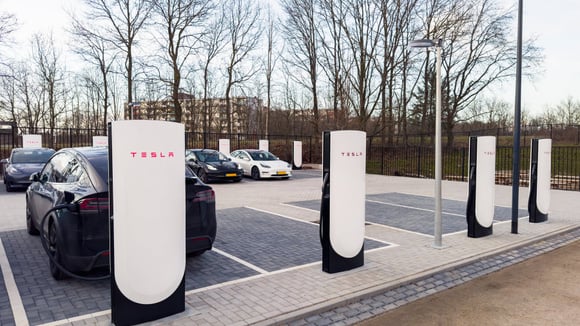
This Supercharger operated on HVO 100, a biofuel derived from plant or animal sources intended to reduce emissions. However, the irony is palpable: an infrastructure meant to support electric mobility relied on a fossil energy source. This paradox did not escape critical minds, raising questions about Tesla’s actions in light of consumer ecological expectations.
Deeper Motivations Behind the Sabotage
While the ecological impact of using diesel is at the heart of concerns, the sabotage of the Supercharger does not appear to be motivated by environmental convictions. A sign left at the site revealed social grievances: “No to unions? No to fascism and strikebreakers. Elon, go home.”

This statement highlights the tense social context between Tesla and its employees in Sweden, where a strike has been ongoing for over two years. The company refuses to sign the sector’s collective agreement, a move that is causing growing discontent among workers. In this context, the sabotage appears less as an act of ecological activism and more as a desperate response to an unacceptable working situation.
Social Tensions: A Conflict Escalating
The climate between Tesla and its employees is particularly strained. While the strike aims to secure fairer working conditions, the company continues to bypass unions, refusing to comply with existing collective standards. This raises questions about Tesla’s human resources strategy and its ability to maintain a motivated workforce.

The IF Metall union has denounced this attitude, claiming that Tesla prefers to recruit abroad rather than negotiate with its local employees. This choice exacerbates tensions and highlights a corporate strategy that seems to ignore Swedish social realities. Support for the strikers is growing, with solidarity actions coming from other sectors, illustrating a unity against a company deemed arrogant.
A Tarnished Image: Tesla’s Perception in Sweden
Beyond internal conflicts, this incident has consequences for Tesla’s image in Sweden. Historically viewed as a pioneer of electric mobility, the brand is now facing increasing unpopularity. Support actions for the strikers and the sabotage of the Supercharger reflect a broader rejection of the company’s practices.

Consumers, increasingly sensitive to social and environmental issues, may reconsider their purchasing choices in light of a company that seems misaligned with their values. The risk for Tesla is to be perceived not only as a technology company but also as a symbol of a certain capitalist arrogance.
An Uncertain Future: What Consequences for Tesla?
In the short term, the situation appears stagnant. The strike continues, and tensions between Tesla and its employees show no signs of easing. In the medium term, the company could face boycotts or a loss of market share if it fails to establish a constructive dialogue with its employees.
Moreover, competition in the electric vehicle sector is intensifying. Other brands, more attuned to social issues and consumer expectations, could capitalize on this situation to strengthen their position in the Swedish market.
In Summary
- Tesla’s installation of a diesel Supercharger in Sweden led to sabotage.
- The sabotage reveals social tensions rather than ecological activism.
- The employees’ strike has lasted over two years with no solution in sight.
- Tesla’s strategic choices raise questions about its social responsibility.
- A tarnished image could harm its sales in an evolving market.
Useful Conclusion: The current situation reveals the challenges Tesla faces in Sweden. For the company, a course correction is necessary: engaging in sincere dialogue with its employees and adopting a strategy more respectful of social norms could be essential to preserve its reputation and market share. Conversely, other brands could capitalize on this opportunity to position themselves as ethical alternatives in the electric market.


