

Fernando Alonso and Lewis Hamilton, both seasoned Formula 1 veterans, share a common disappointment with the current generation of F1 cars on Monaco’s tight street circuit. While the Spaniard points to the complexities of hybrid powertrains, the Briton highlights a general loss of grip, revealing a reality far less glamorous than the iconic Monaco spectacle might suggest.
Formula 1 arrives in Monaco, and with it, its share of legends and debates. This year, the myth of the Principality serves as a backdrop for an unexpected critique: today’s F1 cars, supposedly the pinnacle of automotive technology, are struggling to offer pure driving enjoyment to even the most experienced drivers. Lewis Hamilton, fresh off his move to Ferrari, and Fernando Alonso, a stalwart for Aston Martin, agree on one point: the 2026 F1 cars aren’t the most thrilling to master in Monte Carlo’s narrow streets. Yet, their reasons differ, offering a fascinating insight into the sport’s technical challenges and compromises.
Formula 1, in its perpetual pursuit of innovation and performance, paradoxically finds itself facing criticism about the loss of a fundamental sensation: pure driving pleasure. Monaco, with its legendary and unforgiving track, acts as a revealing mirror, highlighting the limitations of regulations that, while aiming to improve safety and energy management, seem to sacrifice a part of motorsport’s very essence.
Monaco: An Unusual Test for Modern F1 Cars
The Monaco Grand Prix, a highlight of the calendar, offers a unique setting to evaluate F1 cars. Far from high-speed corners and long straights, the street circuit favors millimeter-precision, courage, and fine power management. Ironically, in an era where energy management has become central to race strategies, Monaco requires almost none of it. The governing bodies have even implemented measures to limit car speeds, amplifying the contrast between onboard technology and the track’s demands.
It’s within this context that Fernando Alonso, with over 25 years of Grand Prix experience, has voiced his frustration. From the very first practice sessions, the two-time world champion didn’t mince words, calling the current F1 cars “probably the worst generation of cars I have ever driven in Monaco.” A statement that raises eyebrows, coming from a driver whose career has spanned multiple technical revolutions.
Alonso Denounces Hybrid Inconsistencies
For Alonso, the core of the problem lies in the complexity of hybrid power units. “The way you recharge the battery, with the braking, the lift-off and these kinds of things, obviously creates a lot of irregularities in the engine braking of the car,” he explains. These unpredictable variations in engine braking, caused by the electronic management of energy recovery, make the car unstable and difficult to anticipate, especially in Monaco’s critical braking zones.
The Spanish driver goes further, stating that “hybrid cars shouldn’t be racing.” He points to the lack of engine braking when the battery is full, creating an unexpected “push” sensation. This criticism, though framed within the Monaco context, could also reflect Aston Martin’s difficulties in managing these complex systems, particularly during downshifts. A frontal attack that raises the question of the hybrid technology’s relevance in an environment where simplicity and predictability would be more appreciated.
Hamilton Points to Widespread Grip Issues
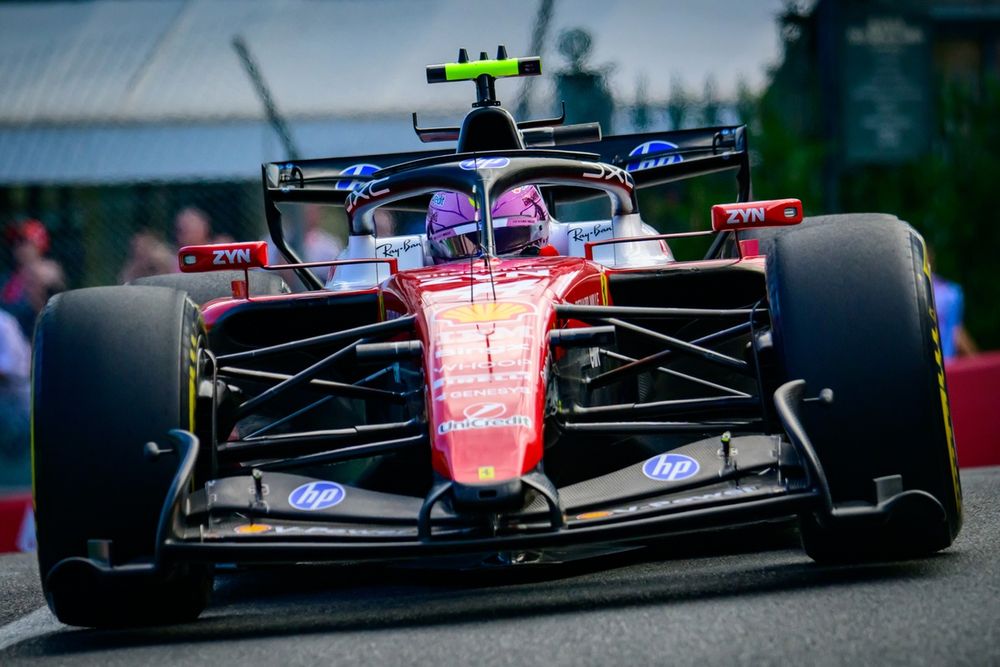
Lewis Hamilton (Ferrari)
Across the grid, Lewis Hamilton shares his elder’s disappointment, but his grievances are of a different nature. The seven-time world champion attributes the lack of enjoyment to a more fundamental issue: the loss of grip. According to him, current regulations, particularly the 2026 rules, have led to a drastic reduction in aerodynamic downforce, a deficit compensated by a significant increase in tire pressures.
Hamilton describes a feeling of “going back a generation” in terms of mechanical grip. He highlights the increase in tire pressures, from 16 psi during his Monaco debut (around 2007-2008) to much higher values today, around 24 psi on the Monegasque circuit. This increased pressure, combined with a loss of downforce, makes the cars harder to handle, less responsive, and consequently, less fun.
The Briton fondly recalls the superior grip of previous generations, believing the period around 2020 represented the “best time” in terms of feel and performance on this circuit. Max Verstappen, present at the press conference, actually agreed with Hamilton’s comments regarding grip compared to 2020, confirming the sentiment shared by some of the grid’s top drivers.
The Paradox of Technology in F1
This divergence of opinions between Alonso and Hamilton, though focusing on different technical aspects, reveals a central paradox in Formula 1’s evolution. On one hand, the pursuit of performance and energy efficiency drives towards increasingly complex technological solutions, such as sophisticated hybrid systems. On the other hand, these same advancements seem to make the cars less predictable and less rewarding to drive in extreme conditions.
Monaco, with its unique demands, highlights these compromises. The loss of grip mentioned by Hamilton and the engine braking irregularities denounced by Alonso are not just technical issues; they touch upon the very essence of driving and spectacle. Fans and drivers alike aspire to an F1 that combines cutting-edge technology with pure sensation, a balance that current regulations seem to struggle to achieve on certain tracks.
Key Takeaways from the Criticism
- Hybrid Complexity: Energy recovery systems create engine braking irregularities, hindering the predictability of current F1 cars, according to Fernando Alonso.
- Grip Loss: Reduced downforce and increased tire pressures diminish mechanical grip, making cars harder to drive, states Lewis Hamilton.
- Monaco as a Revealer: The street circuit’s unique demands amplify the flaws of modern F1 cars and highlight a lack of driving pleasure.
- Nostalgia for Past Generations: Experienced drivers recall superior feel and grip from previous generations, particularly around 2020.
- Technology Debate: The criticism raises questions about whether the race for technology comes at the expense of spectacle and pure driving enjoyment.
Related articles about McLaren F1
Selection of articles, guides and advice about McLaren F1.

McLaren’s MCL40 Struggles: Norris Confirms Disappointing Season
Lando Norris's 2026 Formula 1 season is shaping up to be one of the most disappointing for a…

Monaco F1: Hamilton baffled by Ferrari’s sudden loss of pace, Antonelli snatches pole
Lewis Hamilton's bid for a coveted pole position at Monaco for Ferrari fell apart in qualifying. Despite a…

F1 Monaco: Hadjar’s P5 Grid Slot a Hard-Fought Redemption
Monaco – Isack Hadjar’s fifth-place starting position for the F1 Monaco Grand Prix carries a unique weight. While…

Monaco GP 2026 Qualifying: Verstappen on Pole, Antonelli Stuns
The starting grid for the 2026 Monaco Grand Prix is set, and it promises a thrilling spectacle on…

Audi Open to F1 V8 Return, But Turbo Efficiency Remains Key
Formula 1 is already looking beyond 2026, and discussions about future engine regulations, potentially for 2030, are shaking…

F1 Monaco GP: Antonelli tops final practice, putting Ferrari on notice before qualifying
Under the Monaco sun, the tension is mounting ahead of Grand Prix qualifying. Kimi Antonelli set the fastest…

