In the 1960s, automotive advertising took a bold turn, oscillating between irreverence and sexism. Much like the cult series Mad Men, these advertisements often showcased women, sometimes presenting them as luxury accessories. Let’s dive into this fascinating world where charm and condescension intertwine.
A Look at Cadillac Advertising
The first example that catches our attention is a 1961 Cadillac advertisement. This campaign featured jewelry and tailored dresses, evoking a glamorous universe. The text praised the beauty of the vehicle while suggesting that its ideal owner would be a wealthy woman, ready to “discuss the possibility of a new Cadillac with her family.” A phrasing that, while somewhat paternalistic, at least acknowledged that women could drive.

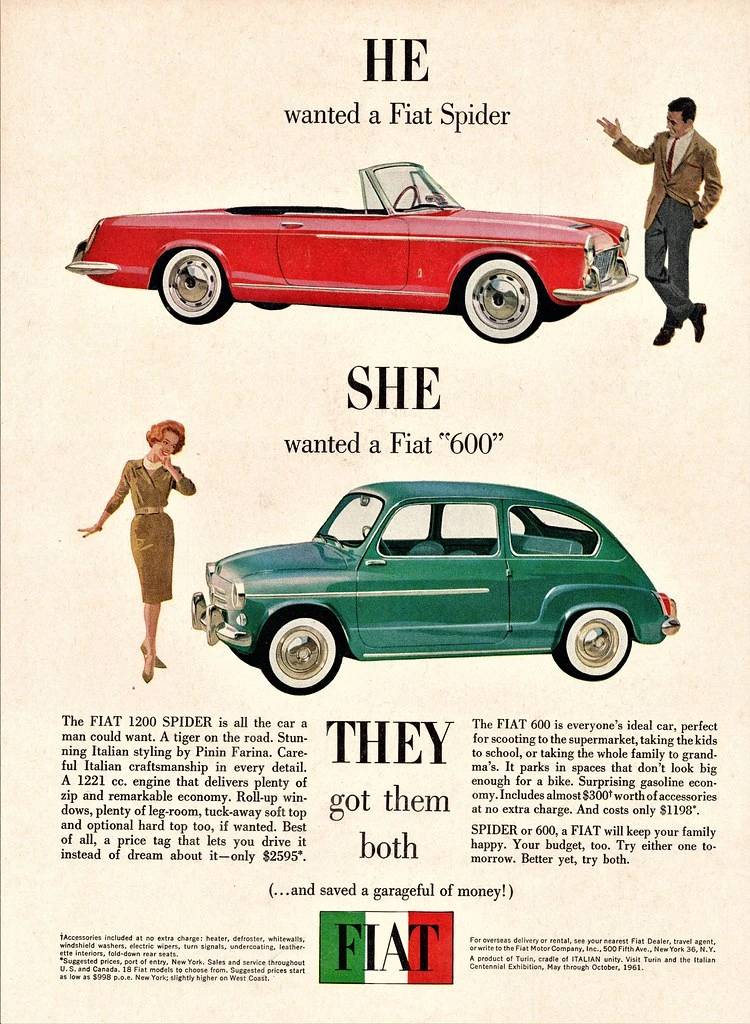
The Fiat Duality: For Him and For Her
That same year, Fiat launched an intriguing advertisement, presenting a model designed to appeal to both men and women. The text touted the FIAT 1200 SPIDER as “everything a man could want,” while the FIAT 600 was depicted as the ideal choice for family life. Far from being subtle, this approach highlighted gender stereotypes while attempting to attract a broader audience.
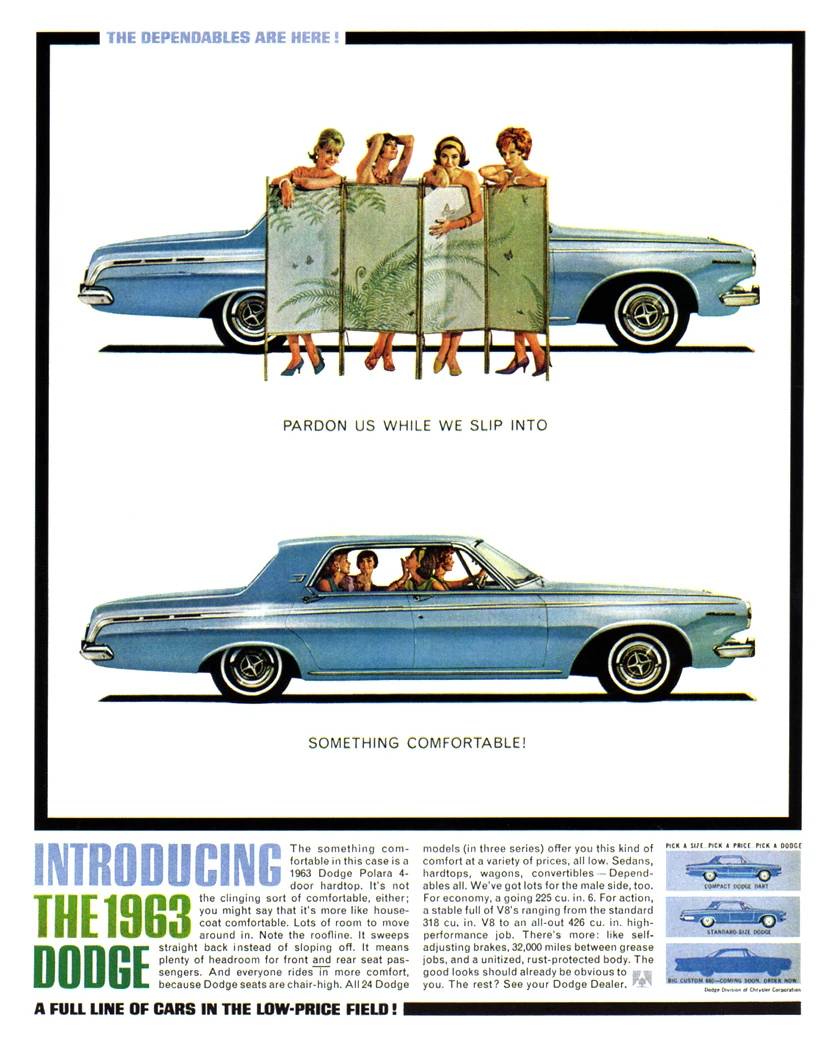
Dodge and Provocation
In 1963, Dodge dared with an advertisement that flirted with provocation. Although nothing indecent was shown, the overall impression was that of a suggestive game of hide-and-seek. The text attempted to restore some balance by mentioning the model’s features while making a clumsy allusion to fashion.
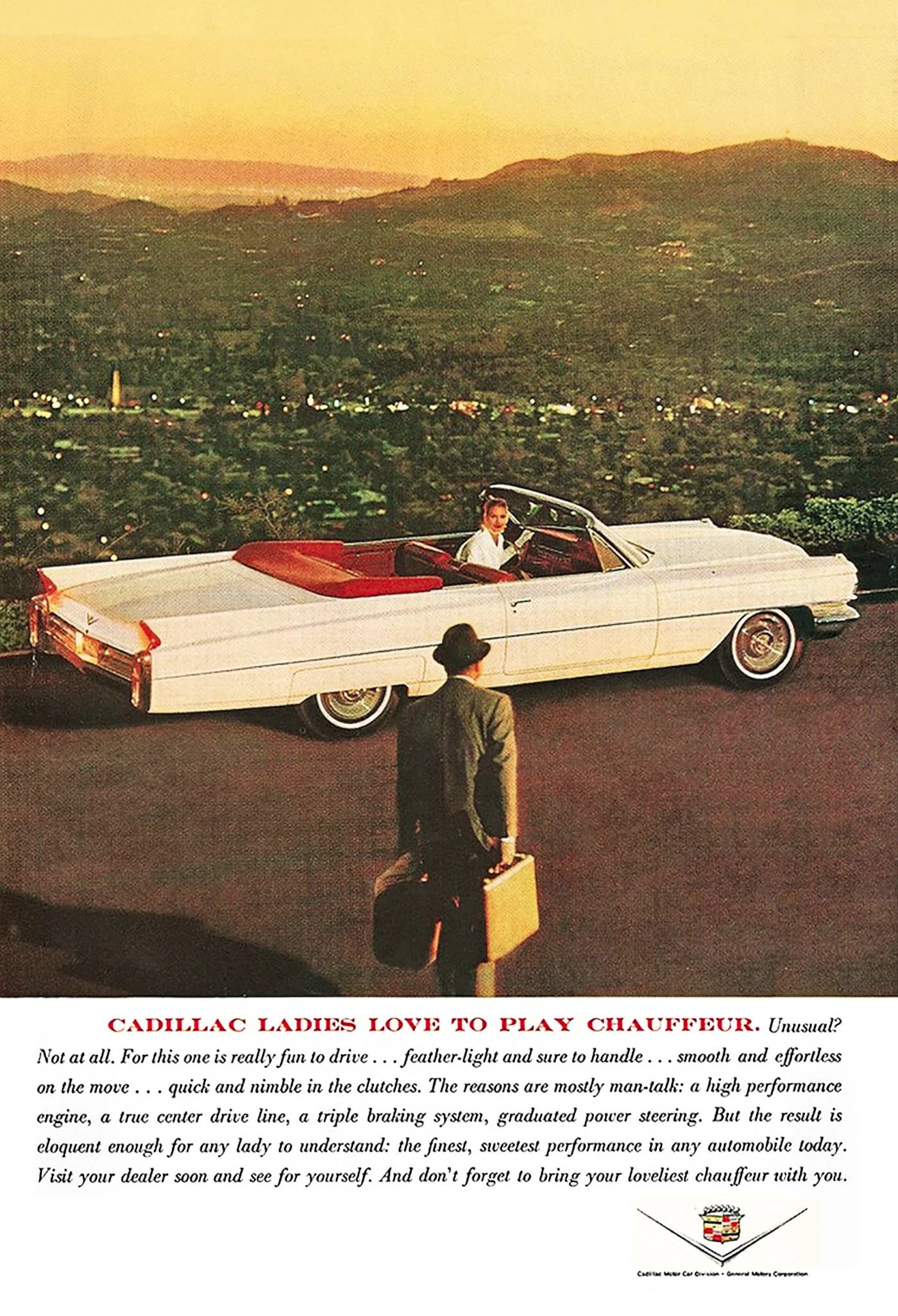
Cadillac: A Mix of Condescension and Elegance
In another Cadillac advertisement from 1963, women were depicted behind the wheel, but always through a condescending lens. The text stated that “ladies love to play chauffeur,” thus reinforcing the idea that these cars were primarily male vehicles, magnanimously made available.
Pontiac and the Blending of Genders
The Pontiac Tempest advertisement from 1963 perfectly illustrates the tensions between genders. The driver, in search of confidence, finds himself face to face with a woman on a motorcycle, symbolizing an emerging independence. The text, although technical, cannot hide the underlying anxiety related to this striking image.

The Temptation of the 1960s
The 1960s saw advertisements flirting with seduction, as shown by the Ford Mustang campaign in 1968. Here, we are introduced to Sidney, whose physical transformation allows him to attract three women. A scenario that underscores the idea that owning a Mustang is synonymous with success with the opposite sex.

Conclusion: A Necessary Evolution
Over the decades, these advertisements reflect an era where sexism was omnipresent, but also a subtle change in the perception of women in the automotive world. Although the road to equality still has a long way to go, these campaigns serve as a reminder that the automotive industry must evolve to reflect modern values. For a dive into the fascinating world of classic cars and their history, check out our dedicated section on automotive passion and collection.