
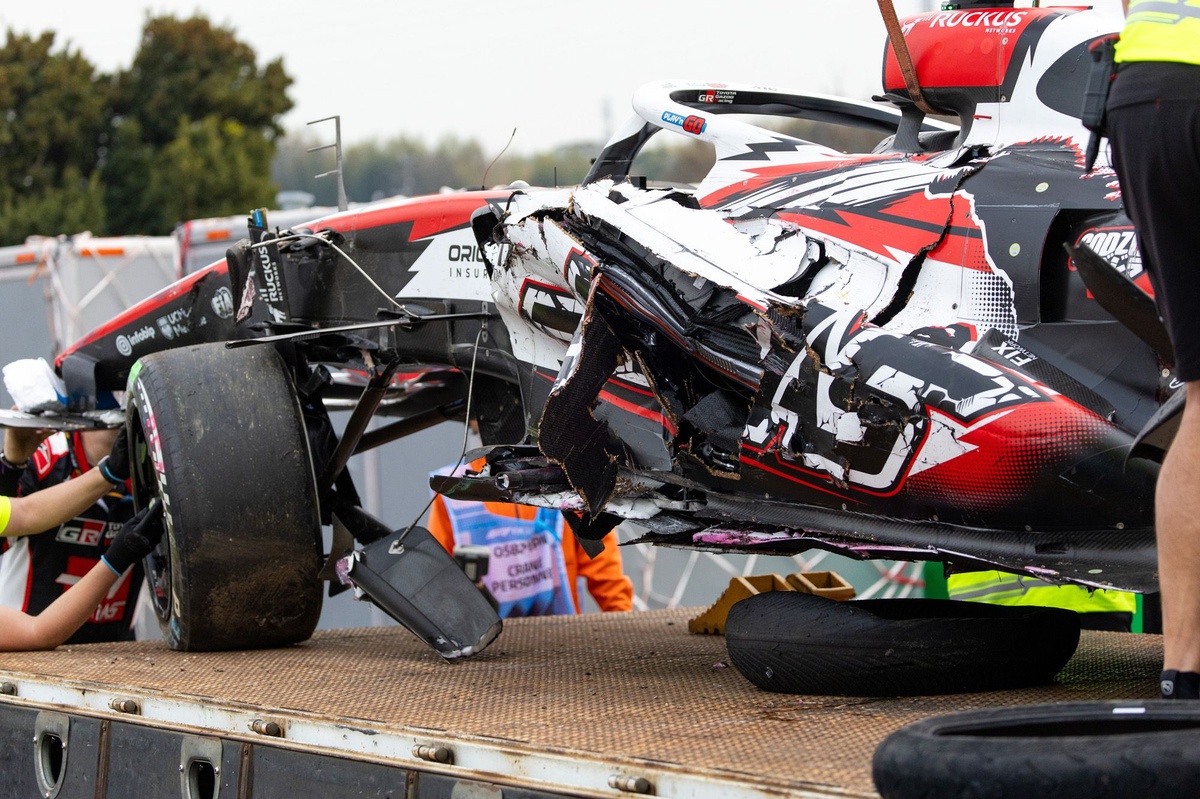
After Oliver Bearman’s violent crash at the recent Grand Prix, Haas team principal Ayao Komatsu is calling for reflection rather than hasty decisions. As the paddock grows concerned about the dangers of approach speeds, the Formula 1 community must take the time to assess the implications before adopting new measures.
A Troubling Incident on Track
For Ayao Komatsu, Haas’s team principal, Formula 1 must avoid any “hasty” reactions following the incident involving his driver Oliver Bearman and Alpine’s Franco Colapinto. In an attempt to surprise his rival while climbing toward Spoon, the British driver—already 20 km/h faster in that section due to energy management differences—used his boost to attack the Argentinian. However, Colapinto took a defensive line, and visibly surprised by the speed difference of around 50 km/h, Bearman veered too far left off the track, putting his wheels in the grass and losing control of his car, which crashed into the safety barriers with a measured impact of 50 g.
Concerns Resurface
This type of incident, which many in the paddock feared, has reignited concerns about the sometimes enormous approach speeds of cars coming from behind and the risks involved in collisions or hasty evasions. So much so that the topic has been moved to the top of the agenda for the upcoming April 9 meeting regarding the 2026 regulations.
Avoiding Rash Changes
However, for Komatsu, it is essential to avoid too rapid changes: “We are examining the situation from all angles, because when we make changes, we must ensure they are relevant.” He emphasizes the importance of a thoughtful approach to avoid mistakes that could harm long-term safety.
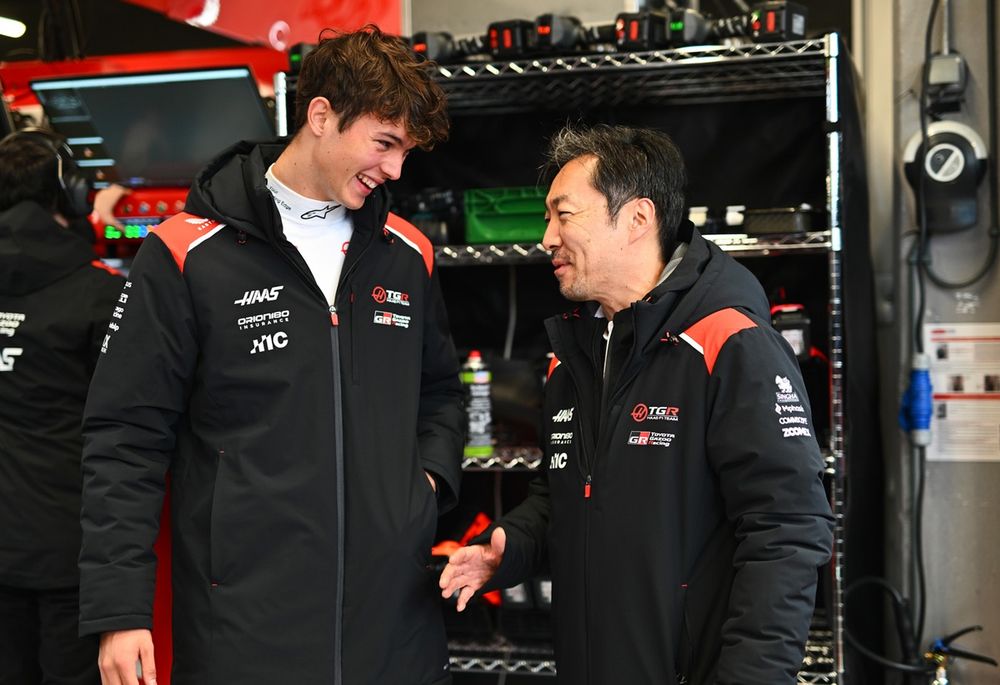
Oliver Bearman and Ayao Komatsu.
“We cannot make hasty decisions only to find out a few races later that it was not the right option.”
“What is positive is that the F1 community, all teams, the FIA, and F1 itself, are all working together in a truly open and transparent manner, which I don’t think I’ve seen at this point before.”
“I am quite confident that F1, as a community, will find the right solution for everything we need to improve.”
No Need for Radical Measures
Despite some voices—most vocally Max Verstappen—calling for drastic changes on issues beyond safety, Komatsu believes the overall situation is not so dire. Only slight modifications would be necessary, particularly to avoid lift and coast during qualifying.
“We have already taken steps, a small step forward for qualifying by reducing the amount of recoverable energy, which has been a positive advancement,” Komatsu told the press, including Motorsport.com, in Suzuka. “But we have already identified several areas. These small differences—not necessarily radical changes—can help address some of the issues encountered in Melbourne and Shanghai, and here we have another example.”
Simple Solutions May Suffice
“We are collectively learning a tremendous amount, but I am sure that if we implement these relatively minor improvements, I think we can significantly enhance both the spectacle and safety.” He adds that there are clear solutions to adopt without excessive complexity. That’s the irony: sometimes, a simple adjustment is all it takes to prevent a future tragedy on the circuits.
In Summary
- Ayao Komatsu calls for careful reflection after Oliver Bearman’s accident.
- The incident highlights risks associated with approach speeds in F1.
- Too rapid changes could be detrimental in the long run.
- Minor adjustments could suffice to improve safety and spectacle.
- Collaboration among teams and governing bodies is essential for progress.


