In a world where speed and innovation intertwine, Jean-Éric Vergne embarks on a new adventure with Citroën in Formula E. Although he did not score any points at the inaugural E-Prix in São Paulo, the French driver displays remarkable confidence about the future. With technical evolutions on the horizon, he seems ready to turn challenges into opportunities.
A forward-looking perspective
Launched into an ambitious challenge in Formula E with Citroën, Jean-Éric Vergne is not discouraged by his difficult start. Although he did not score points at the São Paulo E-Prix, his eyes are set on a promising 2026. Indeed, his technical role will be crucial not only for Formula E, which is about to change its car, but also in the World Endurance Championship (WEC) with the development of the Hypercar at Peugeot. For him, these two worlds are not incompatible, but managing them requires special attention.
A well-considered decision
In an interview with Motorsport.com, Vergne explained: “It was a combination of many factors.” The driver mentioned the development of the Gen4, which is arriving mid-season, as well as that of Peugeot. These elements, coupled with personal considerations, led him to seriously reflect on his commitment: “I couldn’t do everything correctly.”
This introspection led him to choose not to participate in the WEC this season: “The year I return to WEC, there will be no more development of the Gen4. It will be a bit simpler.” A pragmatic approach that reflects his desire to optimize his performance on every front.
The end of a technical chapter
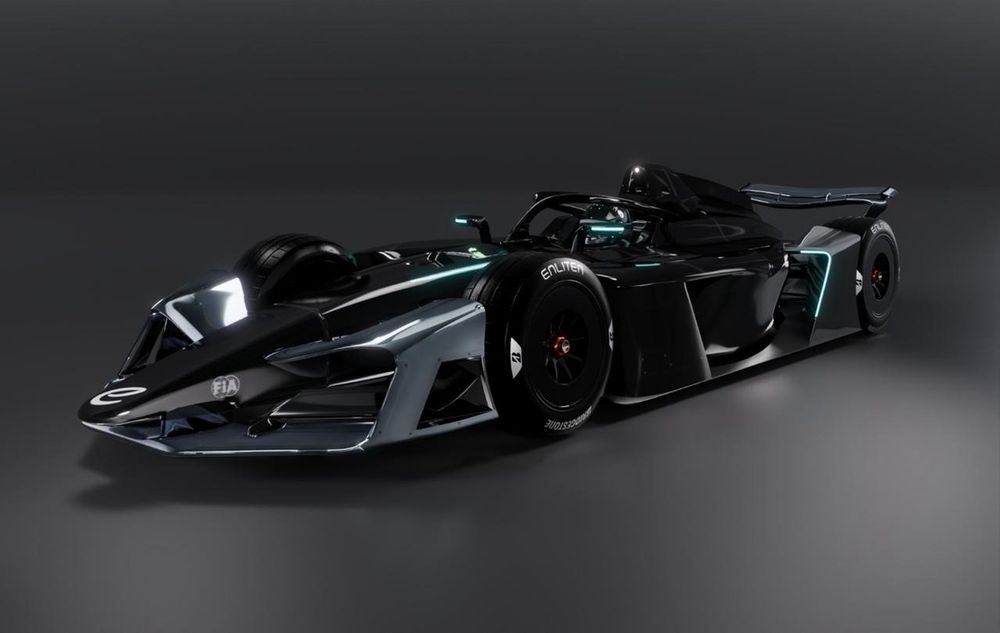
The Formula E Gen4 for 2026-2027.
Formula E enters the final campaign of its third generation of cars. Expectations are high, especially after the announcement of the Gen4 features, which should offer spectacular performance. For Vergne, who has been in this discipline since its inception, it is an opportunity to close a chapter that has not truly captivated him. “For me, the Gen3 was a step backward,” he confides.
He continues: “We may have had more power, but the car simply wasn’t good enough: not enough grip and not very beautiful either.” A bitter observation, but one that opens the door to new hope. “I’m glad it’s its last year. I can’t wait to have the new car.”
Enticing promises with the Gen4
With its 600 kW, or over 800 hp, the Formula E arriving in 2026-2027 generates high expectations. Jean-Éric Vergne shares this enthusiasm: “I haven’t driven the Gen4 yet, but some drivers have, and I’ve talked to them.” His impatience is palpable: “I’ve seen the data. I know the performance of this new car, and I can’t wait to drive it.”
He even goes so far as to say that this evolution will be decisive for the championship: “I think it will be a huge step forward for the championship, in the eyes of all the drivers, the motorsport world, the fans, everyone.”
A new era for Formula E
Vergne’s ambitions do not stop there. He sees the arrival of the Gen4 as a true new beginning for Formula E: “I am convinced that it will improve a lot.” The promises of advanced technology and a more appealing design could well redefine the standards of the championship.
This evolution will not only be technical; it could transform public perception of Formula E. Vergne is clear on this point: “It can be easier. We want to do everything to achieve the best performance.”
Statements collected by Federico Faturos