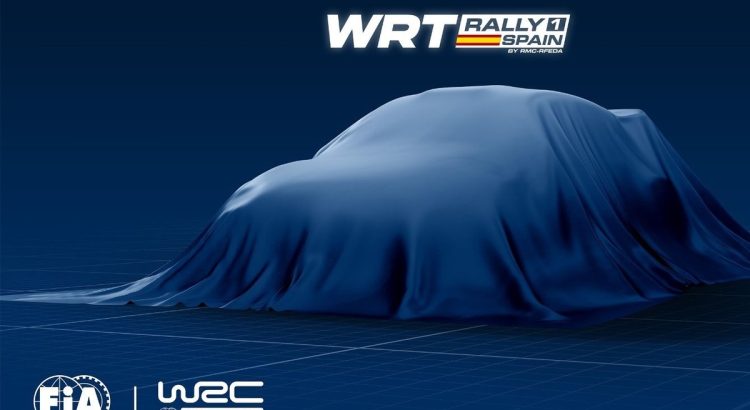
WRC’s 2027 rules may have found their first serious independent test case. RMC Motorsport has formally announced plans to develop a car for the next-generation regulations, with direct support from Spain’s national federation. That matters now because the whole point of WRC27 is to bring credible new entrants into a top class that badly needs more of them.
RMC Motorsport wants to capitalize on WRC27’s opening
The story is straightforward from the start: the World Rally Championship needs new players, and RMC Motorsport wants in. The Spanish outfit, founded by Roberto Méndez in 2004, used Rally Islas Canarias to announce its plan to design, build, and develop a car for rallying’s top category starting in 2027.
This is more than a routine paddock headline. The upcoming WRC27 rules were written specifically to broaden the field by letting specialist builders join the fight alongside traditional manufacturers. Put simply, the FIA has lowered the industrial barrier, and RMC is one of the first operations to publicly say it intends to take that opportunity.
That said, an announcement is not a start entry. There’s still a massive gap between a statement of intent and a homologated car that can survive real stages, real mileage, and the pressure of a world championship program.
RFEDA support gives the project real weight
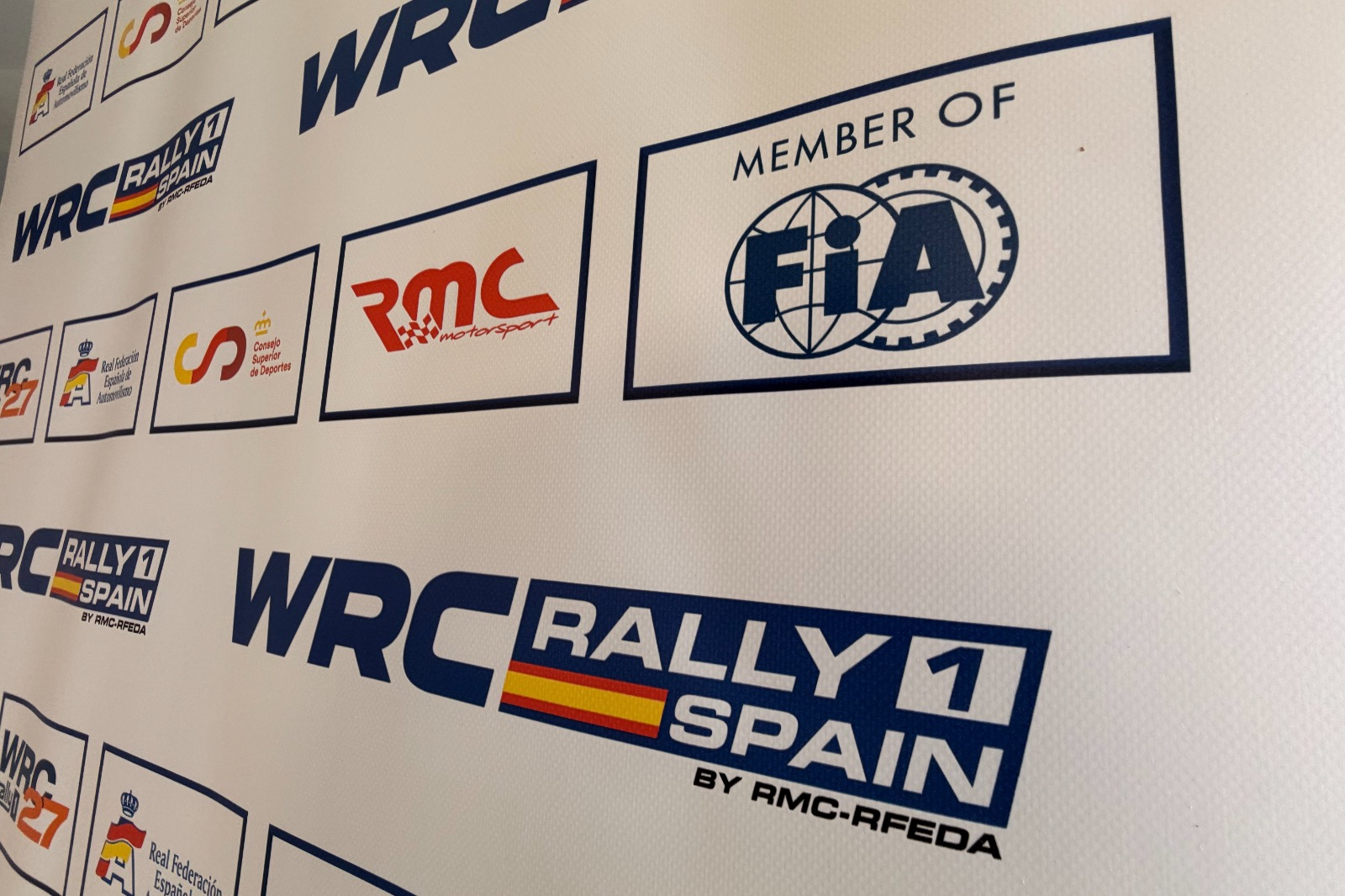
The bigger development here may be the involvement of the Real Federación Española de Automovilismo. RFEDA is officially backing the effort, which, based on the information released so far, makes it the first FIA member club to actively support a future WRC manufacturer project.
That changes the scope of the effort. This is no longer just an ambitious tuner aiming above its usual level; it now carries political and institutional weight that most private operations would struggle to build on their own. Spain clearly wants a seat at the table as WRC resets the rules for getting into the top class.
There’s a domestic angle, too. RFEDA says it wants to create a pathway for future Spanish drivers to reach the highest international level. The logic is simple enough: without a structure, there’s no ecosystem, and without that ecosystem, talent rarely gets all the way through.
The 2027 rules finally make specialist builders a believable fit
If RMC can make this pitch today, it’s because the technical rules have shifted in a meaningful way. The new cars will be capped at 345,000 euros, with a tubular safety cell, double-wishbone suspension, all-wheel drive, and a 1.6-liter turbo internal-combustion engine running on sustainable fuels.
On paper, the idea is clear: simplify the package, contain costs, and make entry less intimidating than it is under the current formula. WRC is trying to move away from a closed-club model, and that may matter more than any big slogan. Rules that scare off entrants do not protect a championship; they slowly thin it out.
The immediate consequence is that private operations can now realistically look at the top category without the industrial muscle of a global automaker. RMC Motorsport says it plans to lean on experience gained from its Group N5 cars, which it has developed over several years and fielded in national and international competition.
Still, perspective matters. A solid technical base and experience in national-level formulas do not guarantee anything once the challenge becomes global. The step from a capable rally car to a machine that can genuinely compete in WRC is steep.
The industrial challenge is the real test
RMC’s first hard reality is already built into the rulebook: any entrant must produce at least 10 WRC27 cars and offer them for sale to other private teams. That is a crucial detail because it turns this from a racing dream into an industrial commitment. Building one prototype for a shakedown headline won’t be enough.
That requirement says a lot about what the FIA wants WRC to become. It is pushing for cars that can be distributed, supported, and defended economically over time. A car that only exists within the team that created it does little to fill out a grid, so RMC will have to prove it can handle production, technical support, and long-term development.
This is where the bet gets serious. Designing a fast car is one thing. Making it reliable, producing multiple examples, supplying parts, supporting customers, and absorbing development costs is something else entirely. World rallying has never been especially forgiving to fragile promises.
Against Toyota, RMC represents a different path
At this point, Toyota is the only official manufacturer to confirm that it will develop a WRC27 car. That is an important reference point: on one side, an established factory player; on the other, new entrants trying to use the new framework to break in. The comparison makes the scale of the gap obvious, even if it doesn’t diminish the value of the Spanish project.
RMC Motorsport is expected to become the second specialist builder to commit to this route after Belgium’s Project Rally One. That alone suggests the regulations are beginning to produce the intended effect by attracting candidates that likely would not have existed under the old setup.
So no, RMC is not arriving as an instant title threat just because it made a public declaration. It matters more as a full-scale test of the WRC27 promise. If an operation like this can make it all the way to a real program, the reform gains real credibility. If these projects fade before the first start, the FIA’s message of openness will age quickly.
The signal is encouraging, but WRC still needs proof
The official comments all point in the same direction. Roberto Méndez presents the program as the culmination of RMC’s growth. Manuel Aviño, president of RFEDA and FIA vice president, has emphasized the opportunity created by the new regulations. Malcolm Wilson also sees the move as a positive sign for the championship’s future.
The message is internally consistent: the FIA wants to show that its new framework can attract newcomers, and Spain wants to show it can carry an ambitious project. Fair enough. But WRC now needs substance more than symbolism. More detailed technical information has been promised, but no precise timeline was included in the material released so far.
That leaves a clear limitation. We know the project exists, and we know why it exists, but we still do not know what the car will look like or where RMC really stands on budget, timing, and competitiveness. In a championship where every season is planned with extreme precision, that uncertainty matters.
What to take away from RMC Motorsport’s WRC 2027 push
- RMC Motorsport has officially announced its intention to develop a car for the upcoming WRC27 regulations.
- RFEDA is directly supporting the project, a first at this level for an FIA member club.
- The 2027 rules open the door to specialist builders through a more accessible technical and budget framework.
- RMC will have to build at least 10 cars and sell them to private teams as well.
- Toyota remains, for now, the only official manufacturer to confirm a WRC27 program.
- The Spanish project looks promising on paper, but it still has to become a real, homologated car.
In the end, this story is less about the arrival of a new giant and more about the most interesting stress test yet for WRC’s next era. For fans, that is good news: the championship is at least trying to become accessible again to more than just major factory operations. But caution is still the right call. Until RMC Motorsport shows a car, a timeline, and a believable industrial base, this remains an appealing bet rather than a proven one. Over the next 3–5 years, that distinction could tell us a lot about whether WRC27 truly broadens the field or simply promises to.