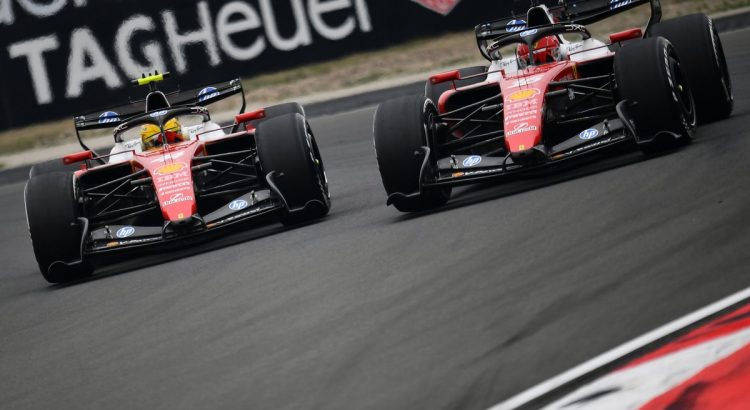
In a Chinese Grand Prix dominated by Mercedes, Frédéric Vasseur’s decision to let Lewis Hamilton and Charles Leclerc battle it out sparked both admiration and questions. This bold choice could redefine the internal dynamics at Ferrari while raising concerns about balancing performance with risk management.
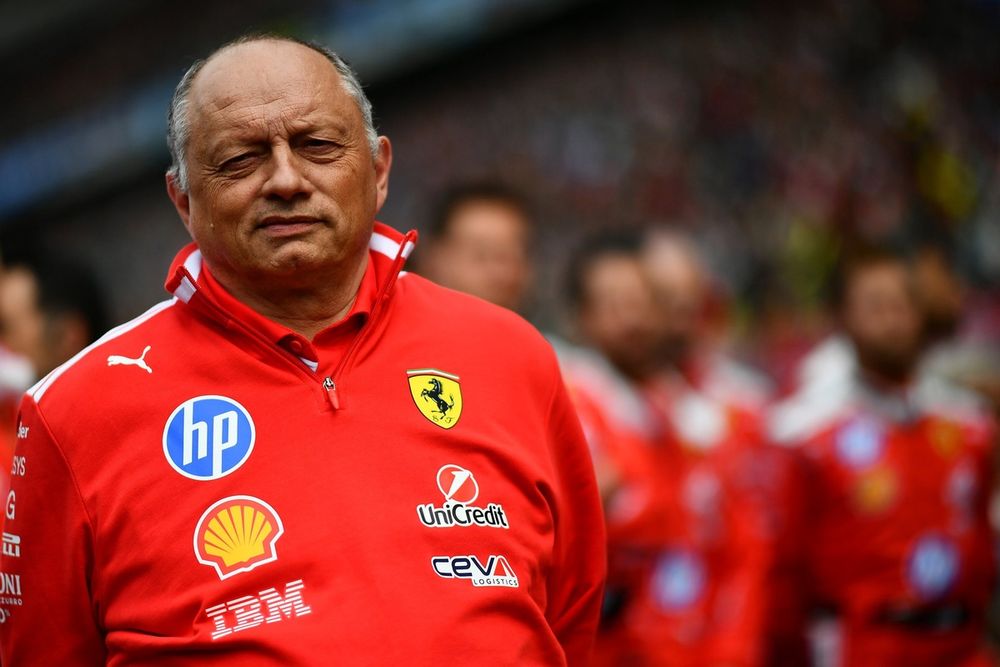
A Captivating Duel in Shanghai
The Chinese Grand Prix served as the stage for a fierce battle between Ferrari’s Leclerc and Hamilton, who exchanged wheel-to-wheel action throughout the first 40 laps. This duel, highlighted by a light contact on lap 25, captivated fans and showcased the Italian team’s strategy. Team principal Frédéric Vasseur chose not to intervene, allowing both drivers to race freely despite the inherent risks of such a decision.
A Bold Strategy for Ferrari
Vasseur justified his decision by expressing confidence in his drivers and a desire not to hinder their momentum. “I prefer things to stay this way,” he stated, emphasizing the importance of letting drivers showcase their potential. Indeed, this type of battle not only benefits the team but also the Formula 1 as a whole, which needs quality spectacles to draw crowds.
Thoughtful Risk Management
Facing the press, Vasseur acknowledged he could come off as “an idiot” if things went south. However, this approach reflects a commitment to building a strong team capable of handling race pressure. “It’s also the best way to build a team,” he explained. By allowing his drivers to compete, he fosters internal competition that could propel Ferrari to new heights.
The Performance Context
It’s crucial to note that the absence of McLarens allowed Ferrari to focus on its own duel. Vasseur recognized that battling against Mercedes becomes trickier when the gap exceeds a second. The drivers’ performance at the start of the race was vital, and this strategy enabled Ferrari to maintain a competitive pace against formidable rivals.
The Stakes of Such a Decision
Letting Hamilton and Leclerc’s rivalry unfold could have long-term implications for Ferrari. If this approach proves successful, it could bolster confidence within the team and encourage other drivers to express their potential. Conversely, a collision could lead to internal tensions and call Vasseur’s strategy into question.
A Fragile Balance to Maintain
In reality, this decision exposes Ferrari to a dilemma: prioritize competitiveness at the expense of safety. In clear terms, the pressure for immediate results could prompt Vasseur to reconsider his stance in the future. The key will be finding a balance between fostering competition and managing risks, especially as the season intensifies against increasingly sharp competitors.
In Summary
- Vasseur chose to let Leclerc and Hamilton race freely.
- This strategy aims to enhance internal competition at Ferrari.
- The absence of McLarens facilitated this direct battle.
- The decision carries risks, particularly in the event of a collision.
- In the long run, this could redefine the team culture at Ferrari.
Who is this for? For fans seeking excitement and intensity in racing, this approach is appealing. Alternatives might include a more conservative management of drivers, but that could undermine the competitive spirit. The strengths lie in the trust placed in the drivers and the competition that can arise from it, while the limits are found in the risk of collisions and potential internal tensions.