

The X5 Gets a Makeover, But Does It Still Feel Like an X5?
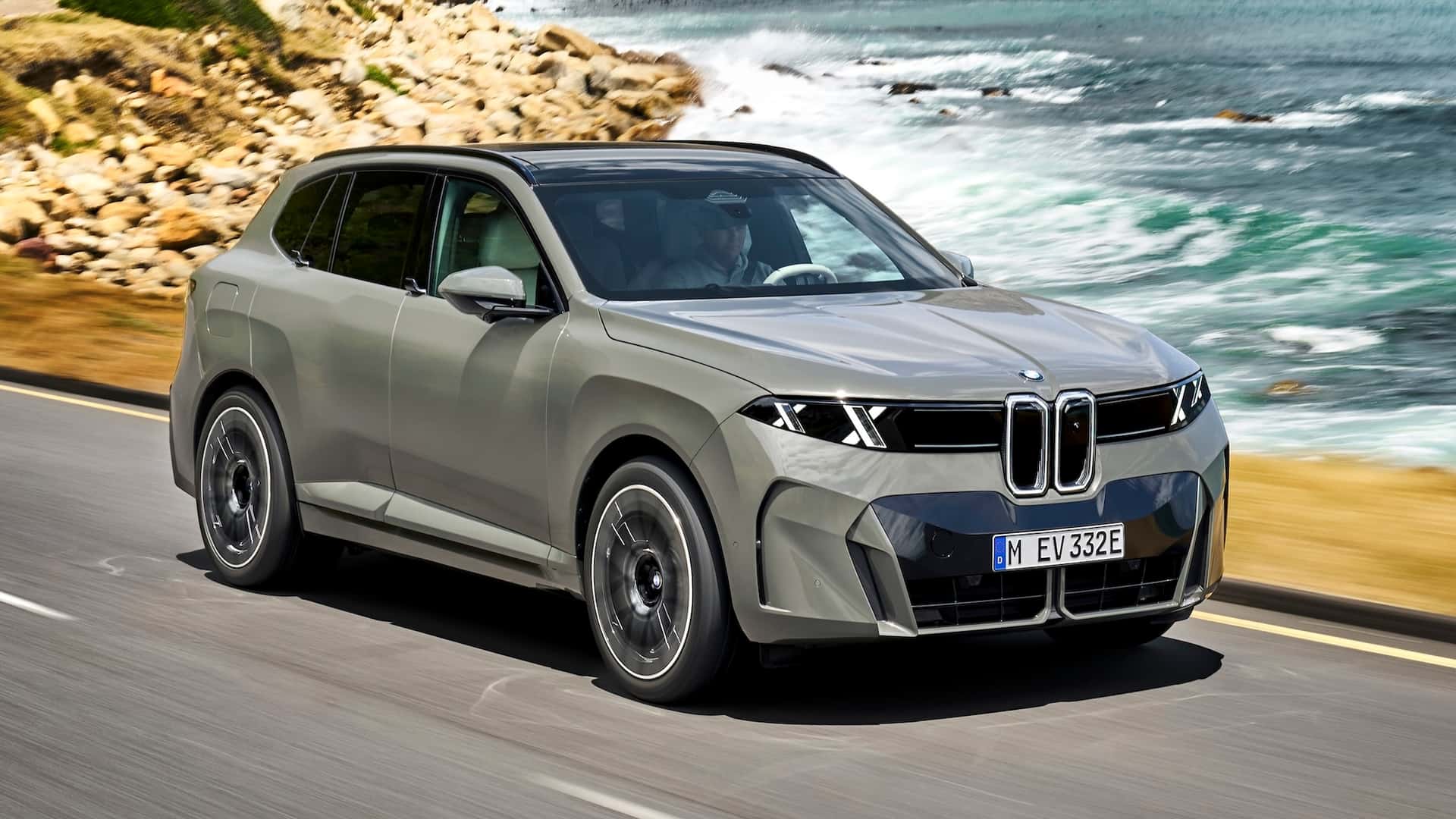
For 27 years, the BMW X5 has been the reliable, albeit slightly predictable, German answer to the luxury SUV question. It’s been a constant in a world of automotive flux, offering a familiar blend of performance, luxury, and practicality. But BMW, it seems, has decided familiarity breeds contempt. The latest X5 arrives not with a gentle refresh, but a full-blown identity crisis, sporting styling that’s a radical departure, a cabin brimming with more screens than a Silicon Valley convention, and a powertrain lineup as diverse as a UN summit.
This isn’t just a new X5; it’s a statement. BMW is betting big that a dramatic shift in design and technology will keep its flagship SUV at the top of the heap. The question is, will buyers embrace this bold new direction, or will they pine for the days of the good ol’ split tailgate?
Then there are the door handles. Yes, BMW has joined the flush-handle club, opting for winged, button-operated openers. It’s all about that sleek, uninterrupted silhouette, a move BMW touts as a testament to their “engineering competence.” You can also summon your X5 like a petulant teenager via the key fob or your smartphone app. It’s futuristic, sure, but it also means one less physical interaction in a world already saturated with digital commands.
The Split Tailgate is Dead, Long Live the Liftgate
But the real head-scratcher, the one that will have purists weeping into their lederhosen, is the demise of the iconic split tailgate. This signature feature, beloved for its versatility—whether loading groceries or providing a handy perch for an impromptu picnic—has been unceremoniously replaced by a conventional liftgate. BMW’s reasoning? Customer feedback and a quest for better aerodynamics. While a slicker rear end might be a win for drag coefficients, it feels like losing a limb for anyone who’s ever appreciated the X5’s unique practicality.
This change, coupled with a stretch in length (2.2 inches longer) and a slight trim in height (0.6 inches shorter), positions the new X5 squarely against rivals like the outgoing iX, hinting at a future where the electric iX might be absorbed into the X5’s broader identity. Size-wise, it’s playing in the same sandbox as its established competitors, but the weight figures are where things get truly interesting.
Heavier Than Your Average SUV (And Then Some)
The new X5 isn’t exactly shedding pounds. The base gasoline model tips the scales at a hefty 5,213 pounds, a nearly 300-pound increase over its predecessor. The plug-in hybrid variant pushes that further to a substantial 5,985 pounds. But the real heavyweight champion, the one that makes you question physics, is the all-electric iX5. It clocks in at a staggering 6,393 pounds, a difference of almost 1,200 pounds compared to the standard combustion engine model. That’s like strapping a small elephant to the roof.
This significant weight gain, particularly in the EV variants, is largely attributable to the new, larger 141.0-kWh battery pack. While this massive battery promises an impressive WLTP-estimated range of up to 525 miles (EPA figures are still pending, likely to be considerably less), it raises questions about handling and efficiency. Can the X5’s chassis truly manage this extra heft without feeling like a lumbering beast?
A Cabin That Screams “Look At Me!”
Step inside, and the X5 continues its dramatic transformation. It’s now fully immersed in BMW’s “Neue Klasse” interior philosophy, which means screens, screens, and more screens. The dashboard is dominated by a colossal 17.9-inch center touchscreen, now optionally flanked by a 14.6-inch passenger display. It’s a digital wonderland, or perhaps a digital minefield, depending on your tolerance for touch controls.
The steering wheel gets a redesign too, featuring slimmer, vertical spokes. If that’s too avant-garde for your taste, the M Sport package offers a more traditional, albeit still sporty, M Sport wheel. The panoramic iDrive system, complete with an AI assistant that can probably order you a pizza or debate the merits of quantum physics, remains under the windshield. BMW claims this setup is designed to handle in-car functions and answer your burning questions, though we suspect its primary function is to keep your eyes off the road and glued to the displays.
A Powertrain for Every Planet
BMW is clearly proud of the sheer variety of propulsion options for the new X5. Globally, there are five distinct powertrains: gasoline, plug-in hybrid, pure electric, diesel, and even hydrogen. However, before you start planning cross-country trips powered by water vapor, the diesel is US-bound, and the hydrogen variant isn’t slated for arrival until 2028. So, for the American market, the focus remains on gasoline, PHEV, and the all-electric iX5.
The standard gasoline offering is the X5 40, packing a 3.0-liter straight-six engine that churns out a respectable 400 horsepower and 428 pound-feet of torque. For those craving more grunt, two plug-in hybrid variants are on offer: the X5 50e and the X5 M60e. Both utilize the same six-cylinder engine, bolstered by a 26.5 kWh battery pack, delivering a potent 489 hp for the 50e and a blistering 612 hp for the M60e. These are serious numbers, promising brisk acceleration for a vehicle of this size and weight.
Model
Powertrain
Output
BMW X5 40
3.0L Straight-Six
400 HP / 428 LB-FT
BMW X5 50e
3.0L Straight-Six PHEV
489 HP
BMW X5 M60e
3.0L Straight-Six PHEV
612 HP
BMW iX5 60
141.0-kWh Battery
578 HP / 593 LB-FT
BMW X5 Hydrogen
TBD
TBD
The all-electric iX5 60 is the halo model for the range, boasting that massive 141.0 kWh battery powering dual motors for a combined 578 hp and 593 lb-ft of torque. While the 525-mile WLTP range sounds impressive, real-world EPA figures will be the true test. The battery technology itself is new for BMW, utilizing larger cells derived from the iX3, promising increased usability and density, which hopefully helps offset some of that considerable curb weight.
Pricing and Availability: The Big Unknowns
BMW is keeping mum on the exact pricing for the new X5, but it’s safe to assume a significant bump over the outgoing model, especially for the electrified variants. Expect it to land in dealerships by the end of 2026. Until then, the current X5 remains the benchmark, but this new generation is clearly aiming to redefine the segment, whether you’re ready for it or not.


The Verdict: A Bold Gamble
- Radical New Design: The X5 adopts a sharper, more aggressive look, ditching familiar cues for a bolder, “Neue Klasse” inspired aesthetic.
- Goodbye Split Tailgate: One of the X5’s signature features is gone, replaced by a conventional liftgate for improved aerodynamics and packaging.
- Screen-Heavy Interior: A massive 17.9-inch touchscreen and an optional 14.6-inch passenger display dominate the cabin, with fewer physical controls.
- Five Powertrain Options: The lineup includes gasoline, plug-in hybrid, and a fully electric iX5, with diesel and hydrogen variants for other markets.
- Significant Weight Gain: Especially in its electric form, the new X5 is considerably heavier, raising questions about driving dynamics.
- High-Tech Materials: Optional slate trim and Alcantara accents signal a push towards premium, modern interior finishes.
BMW has never been afraid to take risks, and with this latest X5, they’ve thrown caution to the wind. It’s a vehicle that’s trying to be everything to everyone: a tech showcase, an eco-warrior, and a performance SUV. The departure from the split tailgate is a significant concession, and the sheer amount of technology packed into the cabin might prove overwhelming for some. However, if BMW can nail the driving dynamics despite the added weight and make this complex interior intuitive, they might just have another hit on their hands. It’s a bold gamble, but one that could pay off handsomely if the execution matches the ambition.


