The technical inspection of two-wheelers took a decisive turn in 2025, and the results are quite surprising. With the introduction of noise tests, motorcycles are now under scrutiny, and the rejection rate is soaring. Between regulation and the reality of the roads, how are motorcyclists adapting to this new challenge?

A Revelatory Assessment for Two-Wheelers
The company Dekra recently shared its 2025 assessment regarding the technical inspection of two and three-wheeled vehicles, as well as cars without licenses. The numbers speak for themselves: the rejection rate for motorcycles has significantly increased, a direct consequence of the implementation of sound tests in inspection centers. These devices, now ubiquitous, have highlighted motorcycles whose engine noise exceeds the authorized limits, thus transforming the French road scene.

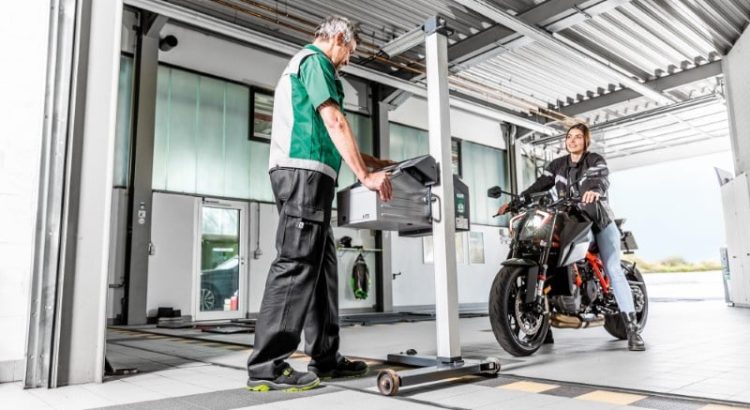
The technical inspection of motorcycles 2025 is now known. © Dekra
For nearly two years, this technical inspection has become a reality in France, a country that has long dragged its feet to harmonize this requirement with the rest of Europe. Although some voices are raised against this new obligation, such as that of the federation of angry motorcyclists, the boycott did not occur. Motorcyclists, often perceived as more conscientious regarding the mechanical state of their machines, are faced with regulations that seem to be more of a financial boon for certain industry players than a true safety measure.
Expected but Striking Results
April 15, 2024, was a pivotal date for two and three-wheeled vehicle drivers. After a full year of measurements, the results of the technical inspection are not surprising: the increase in rejections for motorcycles is significant. This is not a surprise, as the arrival of the first sound tests for motorcycles has disrupted habits. The L3 categories, which represent 75% of the French fleet of two or three-wheeled vehicles, have been the most affected by this new regulation. Meanwhile, two-wheeled scooters represent 13%, and cars without licenses only 4.2%.
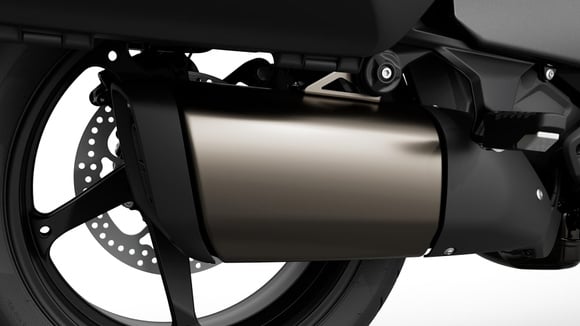
Too loud motorcycles under the scrutiny of technical inspections in 2025 © BMW
These new noise tests have led to a notable increase in re-inspections, reaching even 3% of cases. Dekra emphasizes that these measurements, taken in a less controlled environment than in a laboratory, can be influenced by background noise. Moreover, it is crucial that the vehicle complies with the standards indicated on its registration certificate, taking into account the accepted tolerance margins.
Cars Without Licenses in Difficulty
While the re-inspection rate for motorcycles remains slightly lower than that of cars, the rate for cars without licenses is alarming. In 2025, 25% of vehicles without licenses were rejected during the technical inspection. This raises questions, especially considering that the average age of this fleet is 11 years, compared to 13 years for private and light utility vehicles combined.
Dekra reminds us that the first electric cars without licenses, such as the Citroën Ami launched in 2020, will soon undergo technical inspection. This change could potentially reduce pollution issues and thus re-inspections. The transformation of the fleet of cars without licenses, which has so far been predominantly diesel, towards a gradual electrification could bring new life to this category.
Motorcyclists: Between Adaptation and Resistance
In the face of these new requirements, motorcyclists must adapt. Many of them are already aware of the issues related to noise and take care of their machines to avoid any unpleasant surprises during inspections. However, the rise of sound meters also raises questions about the management of these tests: will they really be reliable in an environment as noisy as a garage?
Motorcycle associations continue to make their voices heard, arguing that the majority of them are already well-informed about the mechanical state of their motorcycles. Nevertheless, the implementation of these new standards could lead to a widespread awareness of the importance of rigorous maintenance and responsible riding.
An Uncertain Future for Technical Inspection
As France embarks on a transition towards more environmentally friendly vehicles, it is clear that technical inspection is evolving in parallel. The new regulations aim not only to reduce noise pollution but also to ensure greater safety on the roads.
Motorcyclists will need to be proactive in the face of these changes, as the current trend seems to indicate that technical inspection will only become stricter in the coming years. Ultimately, the harmonious coexistence between a passion for motorcycles and compliance with regulations will be the true challenge of the years to come.